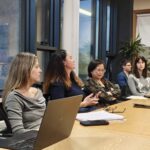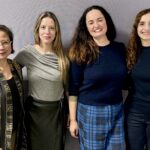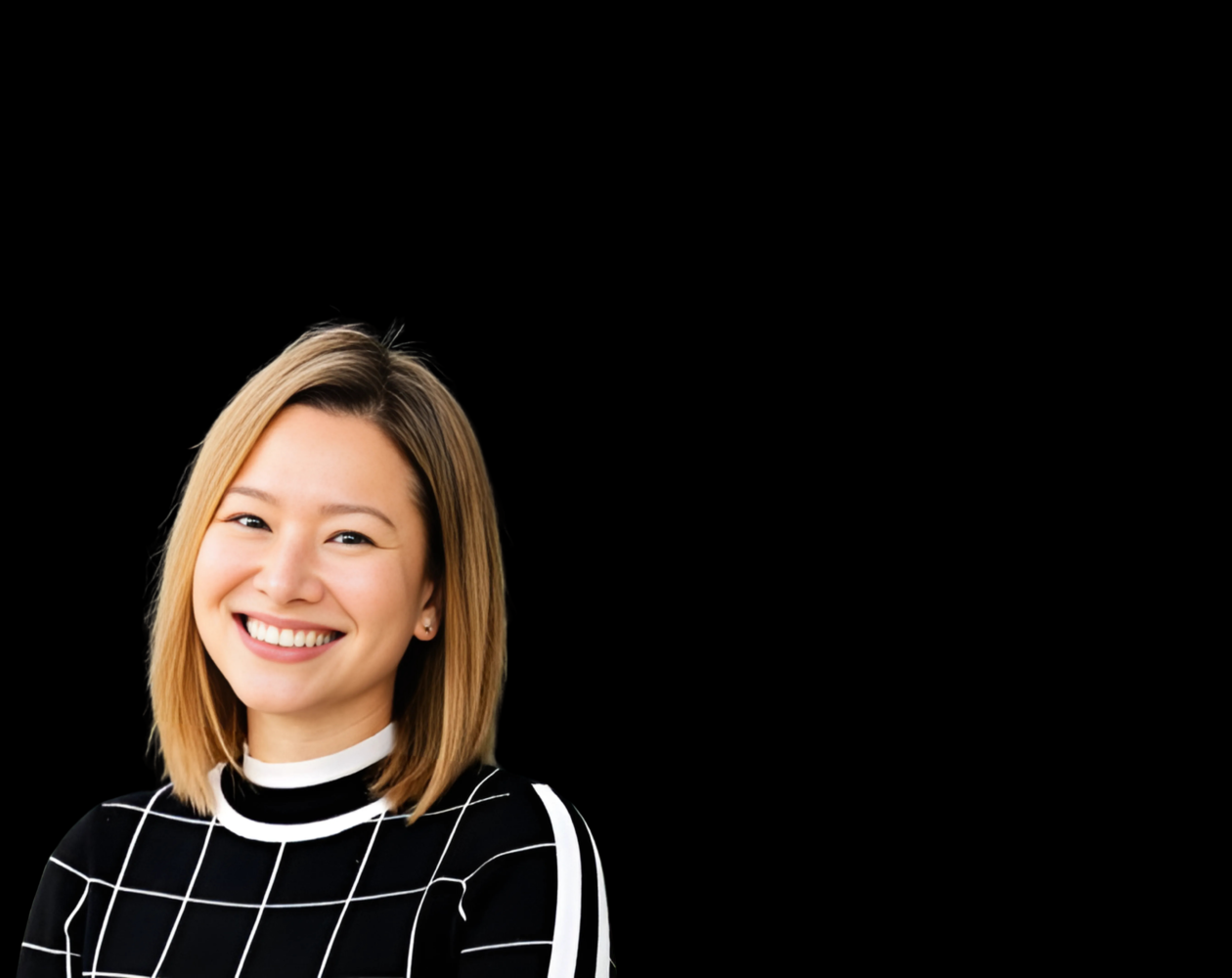
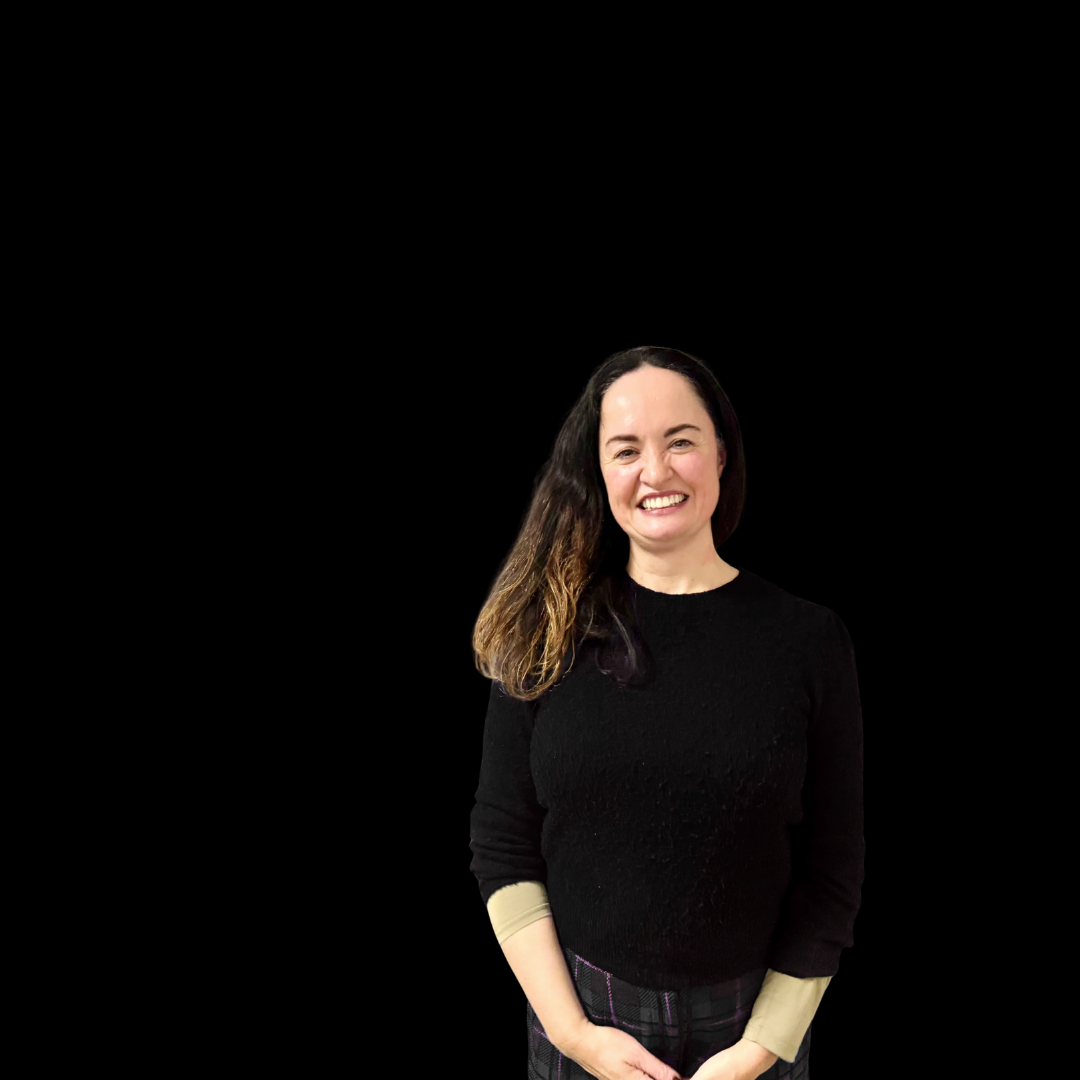

Anna Cristina Pertierra visited UCD to meet with the DeepLab team and launch her book New Consumers in the Global South: No Longer Poor, Not Yet Middle Class (De Gruyter Brill, 2026), co-authored with our director Rosana Pinheiro-Machado, Tingting Liu, Czarina Saloma, and Ahtziri Molina. She is a Professor at the University of Technology Sydney, where she was an Associate Dean of the Faculty of Design, Architecture and Building from 2022 to 2025. Her previous publications include Media Anthropology for the Digital Age (Polity, 2018) and Cuba: The Struggle for Consumption (Caribbean Studies Press, 2012). She is a member of the international advisory board of DeepLab’s flagship project, WorkPoliticsBIP. During her visit, she kindly shared with Marina Frid aspects of her research career, interests, and experiences. The conversation took place on the 3rd of November 2025.
Marina Frid: Anna, thank you for giving us this interview. I wanted to begin by asking you about your research path in anthropology. How did you come about investigating digital media, popular culture, and consumption?
Anna Cristina Pertierra: Well, thank you very much for having me. It’s a pleasure to be here and in conversation with you and other colleagues at the lab. So, from one perspective, my training has been quite traditional in terms of my anthropological formation, insofar as both my undergraduate and postgraduate training were officially in the field of anthropology, specifically social anthropology. In Australia, where I was raised and where I did my undergraduate degree, anthropology has tended to follow the British social anthropological model – at least at the time when I was studying there at the University of Sydney, that was the biggest theoretical influence. Of course, over the decades, things have opened up a little bit more, and anthropology in general, including in Australia, now has a wider diversity of global influences. But then also for my PhD, I studied in a strong department of anthropology [at University College London] with a specific interest in material culture. But although that appearance of a formal training and commitment to anthropology is there, in reality, I think it has always been my interest in interdisciplinary questions that happen to have fallen under the umbrella of anthropology. So in my working career, I have almost never worked in an anthropology program. In fact, only one year out of my roughly 20 years of working as an academic after my PhD has been in an anthropology program. The rest of the time, I have been in interdisciplinary cultural studies programs, and now I have recently begun a new role in a school of design. So, I am always most interested in bringing anthropological questions to an interdisciplinary discussion. And I have often been very interested in working collaboratively in teams. So whether that is with media and cultural studies scholars focusing on the changing role of television in the post-broadcast era, or whether that is in my more recent work looking at consumer cultures across different world regions with other anthropologists, sociologists, media and cultural studies scholars, I love what anthropology brings to those broader conversations.
Marina: Recently, you were one of the leads in a large collaborative project, the New Consumer Cultures in the Global South (CCGS), and before that, you did fieldwork in countries like Cuba and Mexico. Could you comment on why is it important to study media and consumption with a specific focus on countries in the Global South?
Anna: First of all, I should probably preface that I do not consider myself a Global South scholar in that I am not of the Global South. Although I was born in the Philippines, I was raised in Australia. So, I think of myself as an Australian scholar who really engages in dialogue with Global South scholarship, and my fieldwork has mostly taken place, as you mentioned, first in Cuba, then in Mexico, and, for the last decade or more, often in the Philippines as well. I have always been interested in using my experience as someone with Filipino heritage and who spent a lot of my childhood in the Philippines as a lens to help me understand how certain elements of Latin American cultures have worked. So, I think even when I have worked only in one region, through my own family heritage and lived experience, I have always looked through a kind of multi-regional lens to pursue my interests. And I think that my curiosity about Cuban society, and later Mexican society, was often informed by my understanding of scholarship on the Philippines. Specific examples of where that similarity has provoked my interest are around the kind of different relationships between more and less powerful groups that have taken place within these societies, and also the legacy that different forms of colonialism, especially Spanish and American colonialism, have had on the everyday relations and also the development of commercial cultures across those three places. In Cuba, of course, the layer of socialism adds another twist that has been taking place over the last 50-plus years. But the historical legacy has interesting comparative consequences for the role that consumer goods and mass-produced material culture play in shaping the everyday practices of people in these communities, so that even ideas of tradition involve a centuries-long immersion in global trade and consumerism.
Marina: The CCGS project involved fieldwork in cities in China, the Philippines, Mexico, and Brazil. Could you tell us a little bit about the challenges you found in leading a multi-sited project of that scale?
Anna: Well, the project was always a collaboration from the beginning; it evolved from conversations I had first with Rosana Pinheiro-Machado, then with a broader group of investigators that included Czarina Saloma and Tingting Liu, and Ahtziri Molina, who joined a little bit later in the project. So, it was never a single intellectual project led by one person. But I would say that, in my own case, wanting to build this collaboration with my colleagues came from a realization that my curiosity and my intellectual ambitions exceeded my regional capacity and expertise. And so I knew that, in order to pursue some of the questions I wanted, we would have to be working at a scale that would go beyond what I could manage myself in terms of world regions to consider. Working collaboratively with colleagues has allowed me to explore ideas in places like Brazil and China, where I could not have done so by myself. For me, it has not really been a challenge. It has been almost all upside because we have been able to work, I think, in a fairly mutually respectful way, where the collaboration enables us to move into regional spaces that we would not feel confident working on as individuals. For me, it has been an entirely positive collaboration.
Marina: Yes, but in the social sciences, particularly in anthropology, there is a tradition of individual work, of ethnographers who go to fieldwork by themselves and publish as single authors. So, then I would ask not about the challenges, but perhaps what the opportunities are of conducting that kind of collaborative research?
Anna: Although you asked this in the previous question, I would say there are challenges in the sense that putting too many spaces together creates an unwieldy dataset. So, some of our research has sprawled sideways, in ways that seem a little hard to wrangle. I guess that is a challenge. But ultimately, I see that as an opportunity because I have really been able to learn from my colleagues, including the work they did in other projects, what they have worked on in the past, or the disciplinary and regional traditions they have studied. We have been able to put together this composite or patchwork piece, where I am really learning from my co-authors as much as I am learning from the interlocutors in our various sites. The opportunity, then, is for us to open up the conversation in directions none of us would have been able to go by ourselves and to create work where one or two people may take the lead in certain areas. But overall, the project could not have been undertaken without all of us involved. I think the key to generating those opportunities or the key to making these opportunities a reality is in the manner of collaboration, like you need to have a level of respect for collaboration that understands people’s different strengths and weaknesses and interests and availabilities and bandwidth at given times, and to work in a respectful way that manages and accommodates those differences and follows the opportunities for work, rather than imposing a very strict framework that we all have to follow.
Marina: Going back to the beginning, you mentioned you have training in anthropology, but your career has largely been interdisciplinary, as you have mostly worked in departments that are not anthropology departments. Could you talk a bit more about what you think the anthropological perspective brings to other areas of study? How do you think anthropology contributes to interdisciplinary discussions?
Anna: I thought about this quite a lot in some of my earlier research, when I wrote a book called Media Anthropology in the Digital Age (Polity, 2018). Part of what I was interested in was why people in media and cultural studies would be interested in engaging with anthropologists, and why there was a mini-boom in media anthropology work. And it seems to me that ethnography – which is a method not owned only by anthropologists, but that anthropologists are deeply attached to – offers an opportunity for open-ended work that few other methods do. So this kind of deep commitment to working with participants on their own terms, or if not on their own terms, in the spaces where they already exist, going to a field, and the field nowadays could be constituted in many different ways, but it is where the space and the activities and the priorities of your research have to follow the interests and activities of the people you are studying, seems to have a kind of deep appeal for people who are doing a range of multidisciplinary work. So, I think that commitment to this grassroots integration, whether that happens in a far-flung community, far away from where the university is, or whether that happens on a digital platform, that commitment to working where people really are in their lives seems to have an inherent appeal for answering certain kinds of social-scientific questions. I guess the other quality that anthropology brings is an ability to work through induction from small moments to big questions. And although anthropology has a deeply problematic history as part of a colonial project, it has also brought a capacity to study radically different or sometimes very minority experiences and to learn from them. I think that also brings an inherent appeal for many people who are not only anthropologists.
Marina: That was perfect. Thanks very much.
* Dr Marina Frid is a UCD Research Fellow in the School of Geography at University College Dublin. She is the Associate Director of the Digital Economy and Extreme Politics Lab (DeepLab) and a Coordinator of the ERC-funded WorkPoliticsBIP project.